Article
AI content labels
AI content labels

About AI content labels and public trust
This post is very important for umn: keep reading to find out why.
When I write this, Article 50 of the EU AI Act has been in effect for two days. If you publish or post AI-generated text or images, you must label them clearly. It's more complicated, though.
The point of this article in the AI Act is to prevent misinformation and deepfakes. The labels must be used if a piece of news, commentary, or bulletin, or other official communication is generated by AI; or when you publish a photorealistic image that shows people or places that can be recognized for... well, real people and places.
The label must be there in two forms: it must be machine-readable and it must also clearly inform human beings who read or view the content.
Who needs to put the label on the content, and how? There are two roles: providers and deployers. Providers are the tech giants (and other, smaller players) who run the AI systems – mostly image generators or chatbots – that create the content. Providers volunteer: if they sign their commitment to Article 50, they will put a label in the so-called metadata of files they generated, and/or they will place a "digital watermark" on it.
Not all well-known providers signed this commitment. The obligation still remains. This is when deployers come in the picture. Who are they? They are the users who ask the AI systems to generate text or images. You, me, the content agency next door, the nuclear power plant down the road, your tax office, you name it. When they use, publish, or post this text or the images, they themselves must put the label on it.
What happens if you don't do it?
You can be fined for up to 15 million euros or 3% of your global turnover if you are a multi-national corporation.
Are there clear methods to place the label on the content, or to check if a piece of content has this label? Not that I know of, not at this time. Are there clear rules on how authorities audit this and find out if there is a violation? Not that I know of, not yet.
At least we know what the labels look like:
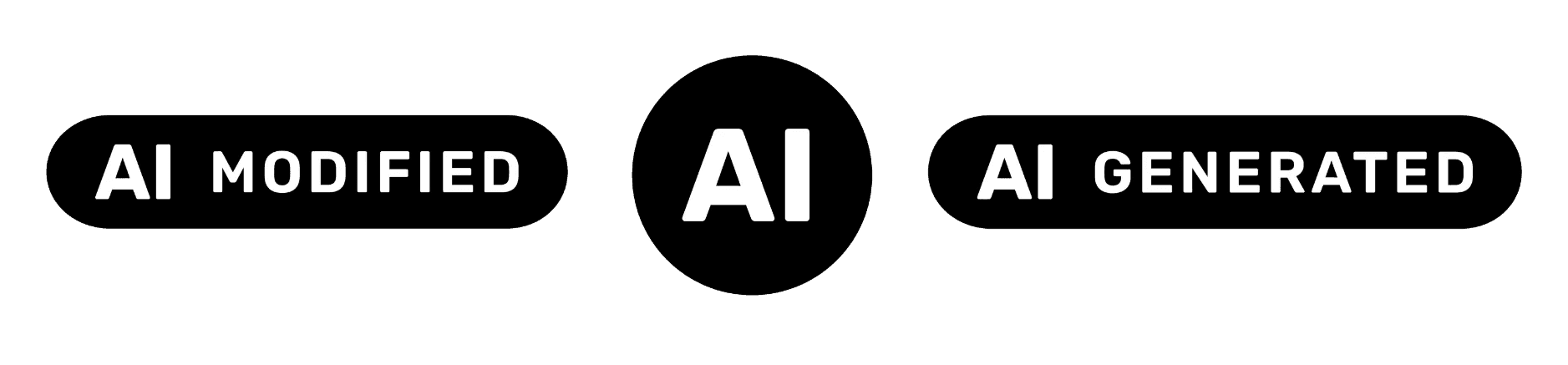
The website of the European Commission even describes how to use them. For more information, the Commission also published a so-called Code of Practice that aims to provide guidance for providers and deployers alike.
You can use different labels or icons, but you must use something.
There is one big thing missing here: a watertight technical implementation for the labeling - so that the origin of the content cannot be concealed. As it happens, it is really easy to conceal the origin of the content or circumvent existing labels. You ask an AI chatbot for a piece of text, and then you paste it in a document that you yourself created. In the document, there will be no proof that the text was generated by the chatbot. The same goes for an image if you take a screenshot and/or edit the image metadata.
There are ways to detect if an image or a piece of text was generated by AI. However, these are not entirely reliable and you can't use their indication as evidence, especially not if you're the authority and you want to fine whoever published the content. There are stories of musicians having their music rejected because an AI-powered AI detection system mislabeled their work. To the credit of the European lawmakers, both the Act and the Code of Practice emphasizes the need for reliable and authoritative detection methods. But these simply don't exist yet.
Labeling AI-generated content is important because you and I, as citizens, have the right to know that the news, report, warning, alert we read or view... is real. But this is not the only reason to know if AI was used in creating something, or how the AI was used there.
People have a tendency to reject AI content in certain areas, topics, or forms of communication. If I reach out to customer support, I want to know whether I am talking to an AI chatbot or a human being. If I read a story, I want to know if it was generated by AI for pure entertainment or promotion purposes -- or it's a real story told by a real person with genuine intention, even if it's fiction or a lie. AI-generated art is all but generally rejected. I, as a member of audience, keep away from AI-generated music or performing arts. In another article, I will tell you why.
There are some technical implementations for marking AI-generated content that are reasonably difficult to circumvent. These techniques are called watermarking, and this is provided by some AI systems and image generators. Specifically, Google introduced SynthID in August 2023. This is a watermarking technique that exists for images and text, and is based on invisible markers placed by the AI model in the image or text. The version that works for AI-generated text was open-sourced for Hugging Face in 2024.
In August 2026, Anthropic announced they will watermark text generated by Claude using a technique that is not based on invisible characters. The watermark is part of the text, and Anthropic promises it will survive copying, pasting, and minor edits. However, at the time of writing, Anthropic still owes us a detector and an open-source detection method.
However, watermarks will not necessarily tell you how much of the text was generated or altered by AI, and there are also methods to remove these watermarks.
Now I want to tell you why this is important for umn.
umn promises AI-free content. Not because we are against AI in general, but because we believe that the most important communication, especially brand communication, must be intentional and unique. Even AI search will upvote quirky human creations.
You ask us to write something. Maybe your positioning statement, your tagline, your product pitch, or your entire brand book. We deliver it and we promise we never used AI while creating it. But do you have to believe us? Of course not. And herein lies our problem: how do you trust a non-AI label if the other labels -- those that prove AI involvement -- are so easy to conceal? Our only recourse is to offer various kinds of warranties for when it turns out that AI was used after all.
You could say that the newest watermarking techniques could be used in some cases. If a SynthID or a Claude watermark is not detected, you have a stronger case when you claim you worked without AI. But this trust is also limited because, on the one hand, plenty of other AI models exist, and on the other hand, the SynthID detector is implemented by Google itself, and Anthropic's watermark will be possible to detect by... Anthropic. This is not necessarily trustworthy: real trust will come from independent aggregated detectors only.
We're not OK with the current situation and we will not leave it at that: we are working on a technical solution. If we get it right, it will be a big deal.
I have a feeling that many things are missing before the AI Act can be enforced. We will watch what happens and post updates... because this is very important to how umn operates.
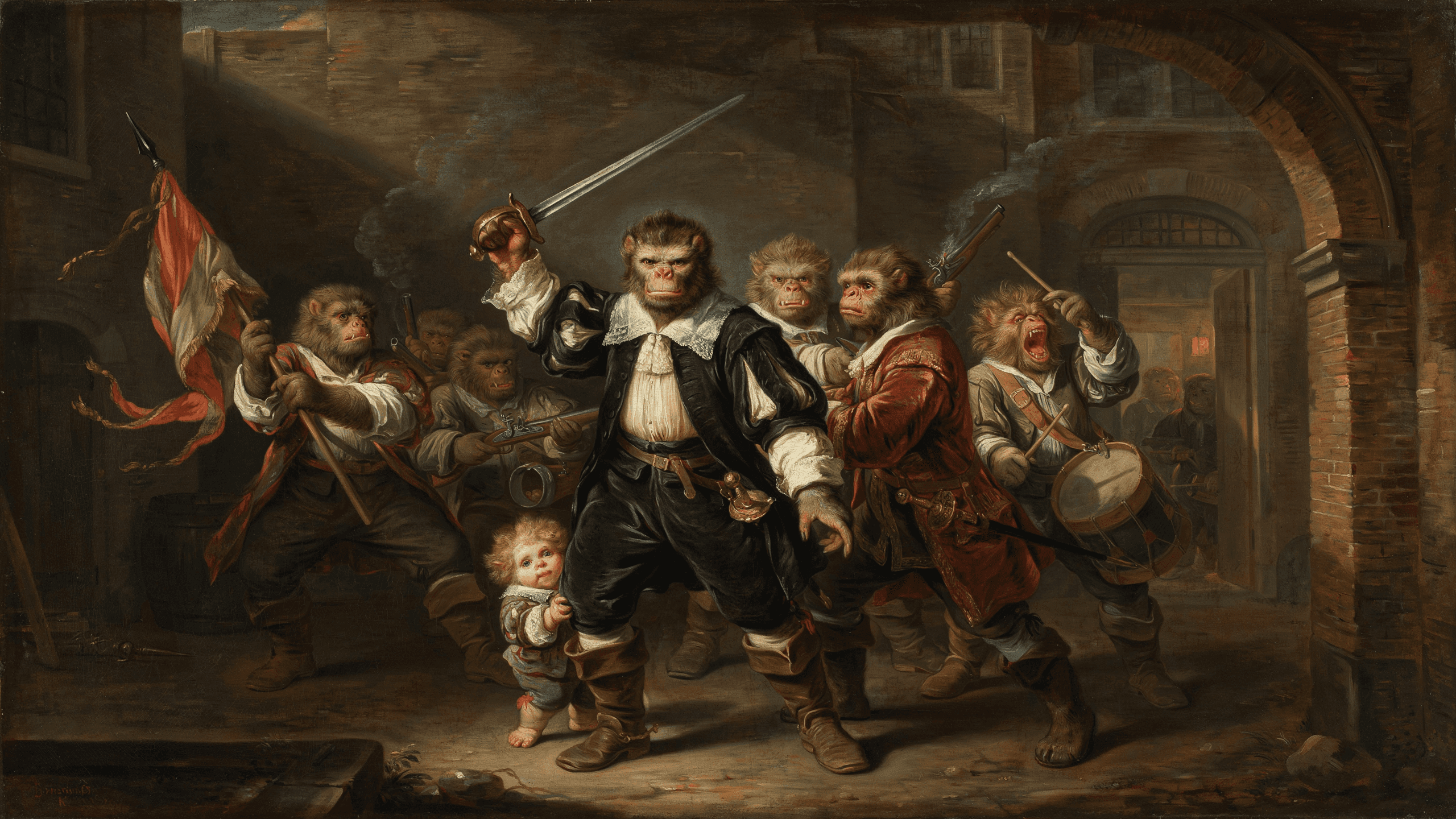
Ceterum censeo, this is how Ideogram imagines the Night Watch with yetis:
umn
About AI content labels and public trust
This post is very important for umn: keep reading to find out why.
When I write this, Article 50 of the EU AI Act has been in effect for two days. If you publish or post AI-generated text or images, you must label them clearly. It’s more complicated, though.
The point of this article in the AI Act is to prevent misinformation and deepfakes. The labels must be used if a piece of news, commentary, or bulletin, or other official communication is generated by AI; or when you publish a photorealistic image that shows people or places that can be recognized for… well, real people and places.
The label must be there in two forms: it must be machine-readable and it must also clearly inform human beings who read or view the content.
Who needs to put the label on the content, and how? There are two roles: providers and deployers. Providers are the tech giants (and other, smaller players) who run the AI systems – mostly image generators or chatbots – that create the content. Providers volunteer: if they sign their commitment to Article 50, they will put a label in the so-called metadata of files they generated, and/or they will place a “digital watermark” on it.
Not all well-known providers signed this commitment. The obligation still remains. This is when deployers come in the picture. Who are they? They are the users who ask the AI systems to generate text or images. You, me, the content agency next door, the nuclear power plant down the road, your tax office, you name it. When they use, publish, or post this text or the images, they themselves must put the label on it.
What happens if you don’t do it?
You can be fined for up to 15 million euros or 3% of your global turnover if you are a multi-national corporation.
Are there clear methods to place the label on the content, or to check if a piece of content has this label? Not that I know of, not at this time. Are there clear rules on how authorities audit this and find out if there is a violation? Not that I know of, not yet.
At least we know what the labels look like:

The website of the European Commission even describes how to use them. For more information, the Commission also published a so-called Code of Practice that aims to provide guidance for providers and deployers alike.
You can use different labels or icons, but you must use something.
There is one big thing missing here: a watertight technical implementation for the labeling -- so that the origin of the content cannot be concealed. As it happens, it is really easy to conceal the origin of the content or circumvent existing labels. You ask an AI chatbot for a piece of text, and then you paste it in a document that you yourself created. In the document, there will be no proof that the text was generated by the chatbot. The same goes for an image if you take a screenshot and/or edit the image metadata.
There are ways to detect if an image or a piece of text was generated by AI. However, these are not entirely reliable and you can’t use their indication as evidence, especially not if you’re the authority and you want to fine whoever published the content. There are stories of musicians having their music rejected because an AI-powered AI detection system mislabeled their work. To the credit of the European lawmakers, both the Act and the Code of Practice emphasizes the need for reliable and authoritative detection methods. But these simply don’t exist yet.
Labeling AI-generated content is important because you and I, as citizens, have the right to know that the news, report, warning, alert we read or view… is real. But this is not the only reason to know if AI was used in creating something, or how the AI was used there.
People have a tendency to reject AI content in certain areas, topics, or forms of communication. If I reach out to customer support, I want to know whether I am talking to an AI chatbot or a human being. If I read a story, I want to know if it was generated by AI for pure entertainment or promotion purposes -- or it’s a real story told by a real person with genuine intention, even if it’s fiction or a lie. AI-generated art is all but generally rejected. I, as a member of audience, keep away from AI-generated music or performing arts. In another article, I will tell you why.
There are some technical implementations for marking AI-generated content that are reasonably difficult to circumvent. These techniques are called watermarking, and this is provided by some AI systems and image generators. Specifically, Google introduced SynthID in August 2023. This is a watermarking technique that exists for images and text, and is based on invisible markers placed by the AI model in the image or text. The version that works for AI-generated text was open-sourced for Hugging Face in 2024.
In August 2026, Anthropic announced they will watermark text generated by Claude using a technique that is not based on invisible characters. The watermark is part of the text, and Anthropic promises it will survive copying, pasting, and minor edits. However, at the time of writing, Anthropic still owes us a detector and an open-source detection method.
However, watermarks will not necessarily tell you how much of the text was generated or altered by AI, and there are also methods to remove these watermarks.
Now I want to tell you why this is important for umn.
umn promises AI-free content. Not because we are against AI in general, but because we believe that the most important communication, especially brand communication, must be intentional and unique. Even AI search will upvote quirky human creations.
You ask us to write something. Maybe your positioning statement, your tagline, your product pitch, or your entire brand book. We deliver it and we promise we never used AI while creating it. But do you have to believe us? Of course not. And herein lies our problem: how do you trust a non-AI label if the other labels -- those that prove AI involvement -- are so easy to conceal? Our only recourse is to offer various kinds of warranties for when it turns out that AI was used after all.
You could say that the newest watermarking techniques could be used in some cases. If a SynthID or a Claude watermark is not detected, you have a stronger case when you claim you worked without AI. But this trust is also limited because, on the one hand, plenty of other AI models exist, and on the other hand, the SynthID detector is implemented by Google itself, and Anthropic's watermark will be possible to detect by... Anthropic. This is not necessarily trustworthy: real trust will come from independent aggregated detectors only.
We’re not OK with the current situation and we will not leave it at that: we are working on a technical solution. If we get it right, it will be a big deal.
I have a feeling that many things are missing before the AI Act can be enforced. We will watch what happens and post updates… because this is very important to how umn operates.
Ceterum censeo, this is how Ideogram imagines the Night Watch with yetis: