Article
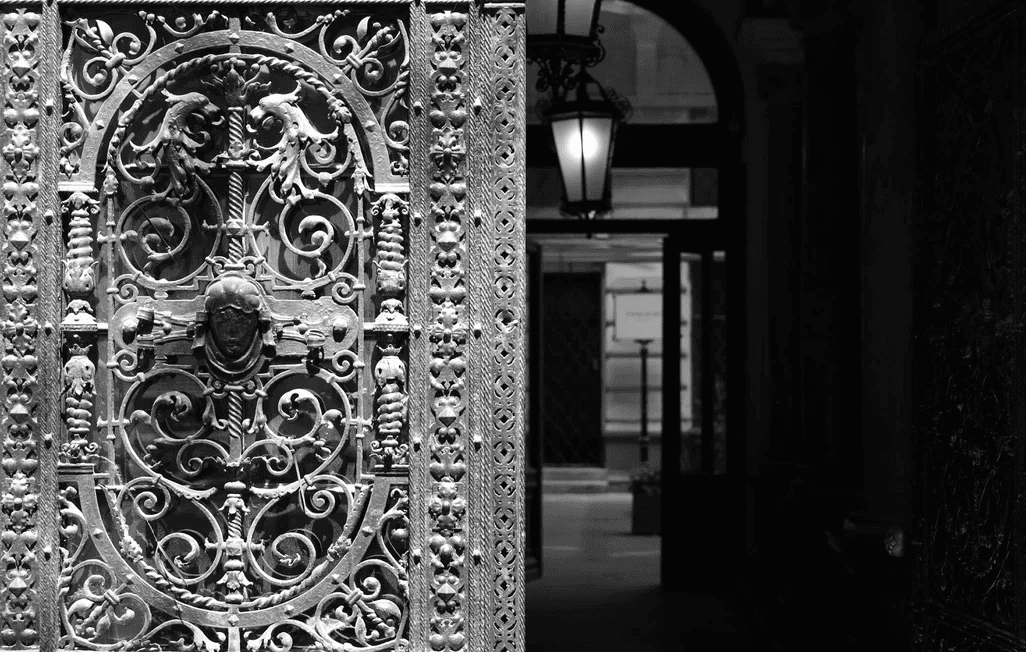
Human intention
in writing and brand communication
This sounds like the title of a serious book on a marketer's bookshelf, so let's clear up something right at the start. My expertise is not in marketing or branding; that would be my business partner Gio.
But – as someone with a background in linguistics, engineering, publishing, and some ethics, I know communication, writing, AI, computers... and humans. Not as well as I think I should, but I had my share of experience.
This up there, weird as it looks, is called the captatio benevolentiae [1]. In English, I could say I'm trying to "capture your goodwill", so you continue reading with an open mind and with a readiness to believe and internalize what I have to say.
A captatio benevolentiae is not simple stylistic element. It reflects the speaker's intention on two levels: they signal that what follows is important; and they also signal that they have a clear intention to communicate.
Human speakers structure their speeches for efficiency. They know that not everything they say will reach the minds of the audience. In fact, each member of the audience will remember a slightly different speech. So, it's natural for the speaker to want to minimize the loss and maximize alignment across the audience.
There is a name for the art of recognizing my own intention as a speaker, and structure my speech accordingly: it's called rhetorics. There is no communication or rhetorics without a speaker's intention.
This is one of the main reasons why we at umn will only deliver writing and other content that is made by human hands and human minds. And you guessed right: I am talking about human hands and human minds as opposed to artificial intelligence... because the idea to get cheap help from AI comes easy these days. It might also be the wrong idea at times.
When a company or a brand communicates, it is very intentional.* [2] [3]
What do I mean by this? A company doesn't simply want to give you information. They also want an outcome for themselves, in the form of business revenue, and a sustainable, or maybe even growing, business operation. This means they need to sell their products or services to you. More precisely, they need to make you buy their products or services – and they can do this through efficient, specific, and consistent communication. Through writing and visuals that grab your attention and your goodwill, and keep them.
When a business hires an agency like umn to help in communicating about their brand, they effectively ask the agency to represent their intention and identity to the rest of the world. In this setup, a good agency will act with double the intention. First, they will want to understand the intention and the identity of their client, and they will want to assist the client in reaching their desired outcome. Second, they will want to create communication that closely matches their understanding of what their client wants and/or needs. If either level is missing, the brand communication will either look bland and mediocre, or it will feel dishonest.
At this point, I think we answered the question of why AI is not the best choice if you need to lay the foundations of your brand communication, the language of your business. The vulgar assumption is that AI has no intention; that it cannot want to align with your intention or simply do a good job. It is true that an AI model or an AI chatbot will not start to emit text on its own; it will only communicate if a human prompts it first. So, whatever you get from an AI model will be a response to something a human says or writes. But it's not that simple.
The following description assumes that AI has no human-like intention or agency. But this is being challenged from two directions: one is that the definition of attention is more complex than most of us think [4] and that automated systems, including AI, shape and interfere with the intention and will of the humans who interact with them [5]. However, for our purposes, the reasoning below will be enough.
When an AI system looks like it communicates or acts on its own, it happens because an algorithm, engineered by humans, prompts it to do so. This setup – the AI model and the algorithm (the harness) together – is called an AI agent. Whenever you read that an AI model went rogue in a safety test, it happens because the AI model was prompted, maybe indirectly, to try to go rogue.
At our prompt, the AI model must respond: it has no choice in the matter. But how does it choose what to answer, in what order or structure? To simplify this to the extreme, the model will follow its internal neural pathways to reach the maximum reward that those pathways suggest. These rewards evolve when the model is trained from examples and patterns of human communication. Yes, the AI model follows patterns; but these are very sophisticated and complex, and the response will, in most cases, suggest real intelligence. We can also say that the AI model will mimic the external behavior of human beings when said human beings write intelligently. The AI model will write whatever is usually written in similar situations. It will not try to be unique or engaging; it will give us an average, sometimes a good one though.
When the AI model chooses to follow a certain path to maximize its reward, we could say it makes choices; but these choices happen at the micro level, and do not follow from the understanding of the intention behind the user's prompt. It will follow from the model's training. The training of an AI model happens through reinforcement learning. This is similar to how messenger pigeons are trained, and isn't at all like human learning. Humans can learn from minimum information, and use intuition and extrapolation to get maximum knowledge out of this minimal input.
The intention to communicate requires consciousness, too. We can comfortably assume that an AI system is not conscious, although some debate this and attribute some kind or level of consciousness to them.
But – and this is where we return to umn and human minds and hands – the only time we can know that our intention is understood and will be followed to the best of our helper's abilities... is when our helper is a human being.
umn
*Brand communication is more intentional than art. Art can be instinctive, inadvertent, incidental, sometimes secondary (think of photographing things that are there rather than built and posed). This does not mean it's unintentional, but it isn't created with the same amount of directness or awareness as brand communication is. And it definitely does not mean that brand communication is superior to art. It has a different purpose and a different way of working.
Sources and Additional Reading
[1] Marcus Tullius Cicero: De oratore (On the Orator). Originally written in 55 BCE, this translation by J. S. Watson (1860) is available online: https://www.attalus.org/info/deoratore.html
[2] Cohen, Philip R.; Morgan, Jerry; Pollack, Martha E. (editors): Intentions in Communication. The MIT Press: 2003.
[3] Matravers, Derek: There's no such thing as AI Art. (AI can create beauty, but not meaning). The Institute of Art and Ideas: 2026. Available online at https://iai.tv/articles/theres-no-such-thing-as-ai-art-auid-3621
[4] https://ai-intentions.org/research/ [This is a description of research questions about intentionality in AI systems]
[5] Katalin Bártfai-Walcott: The False Intention Economy: How AI Systems Are Replacing Human Will with Modeled Behavior. LinkedIn: 2025. Available online at https://www.linkedin.com/pulse/false-intention-economy-how-ai-systems-replacing-b%C3%A1rtfai-walcott-4vxuc